

For many entrepreneurs, growing sales can destroy your cash flow, even though sales growth is usually seen as a sign of success.
Yet in practice, I have seen many businesses enter their most stressful financial moments precisely when sales begin to grow.
Not because the business model is flawed.
Not because the company is losing money.
But because growth, paradoxically, can consume cash faster than the business generates it.
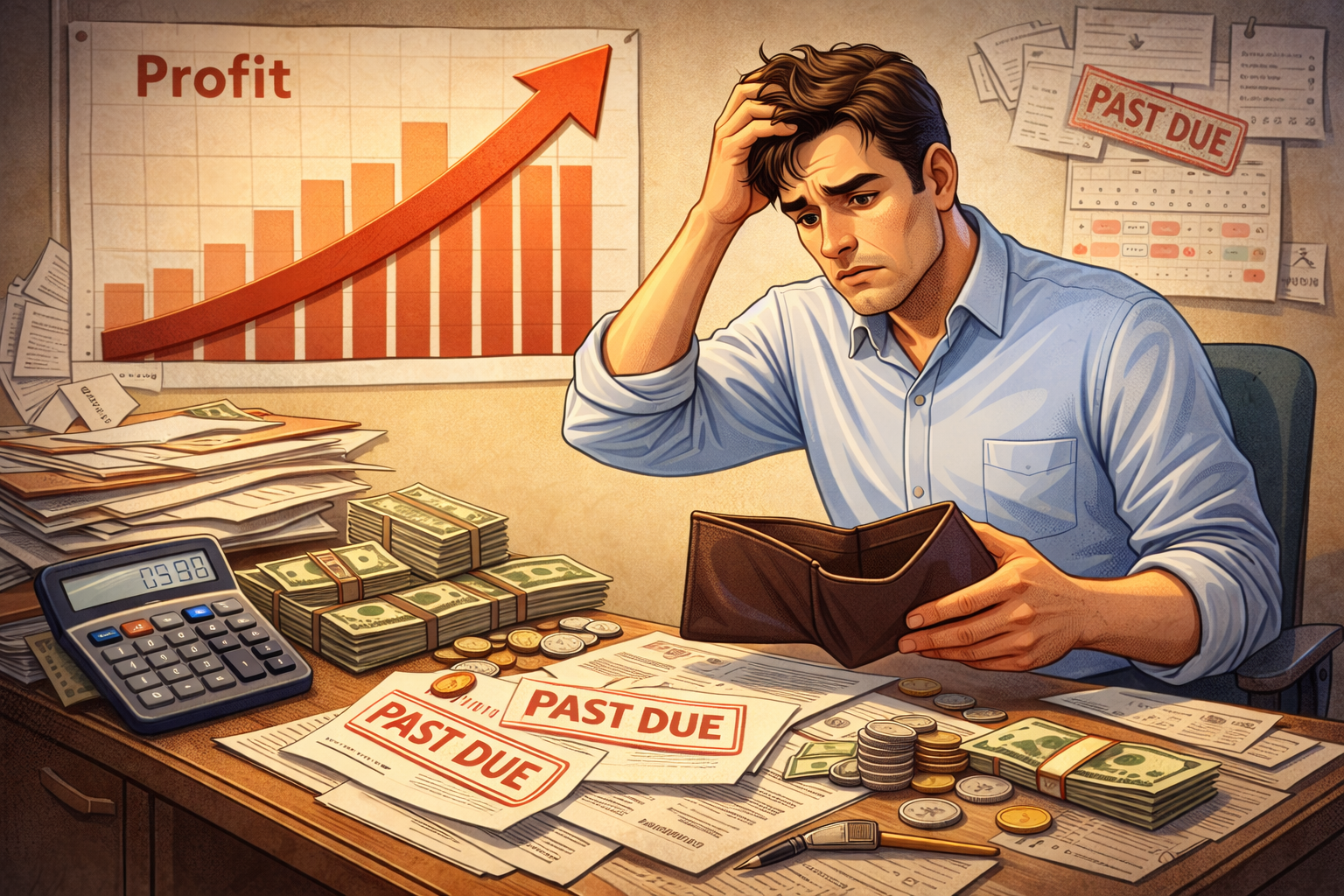
And when that happens, the company may appear successful on paper while struggling to breathe financially.
When Growth Starts to Create Pressure
In theory, growth should improve a company’s financial position. Higher revenue should lead to higher profits and, eventually, stronger cash flow.
But the operational reality is often more complicated.
As sales increase, the business suddenly needs more of everything:
- more inventory to support demand
- more credit extended to customers
- more logistics, production, or operational capacity
Each of these requires cash before the company collects the money from the sale.
This is where many businesses begin to feel the strain. The income statement shows increasing revenue, yet the bank balance tells a different story.
The company is selling more, but the cash has not arrived yet.
The Invisible Engine Behind the Problem: Working Capital
At the heart of this phenomenon lies a concept that many entrepreneurs underestimate: working capital.
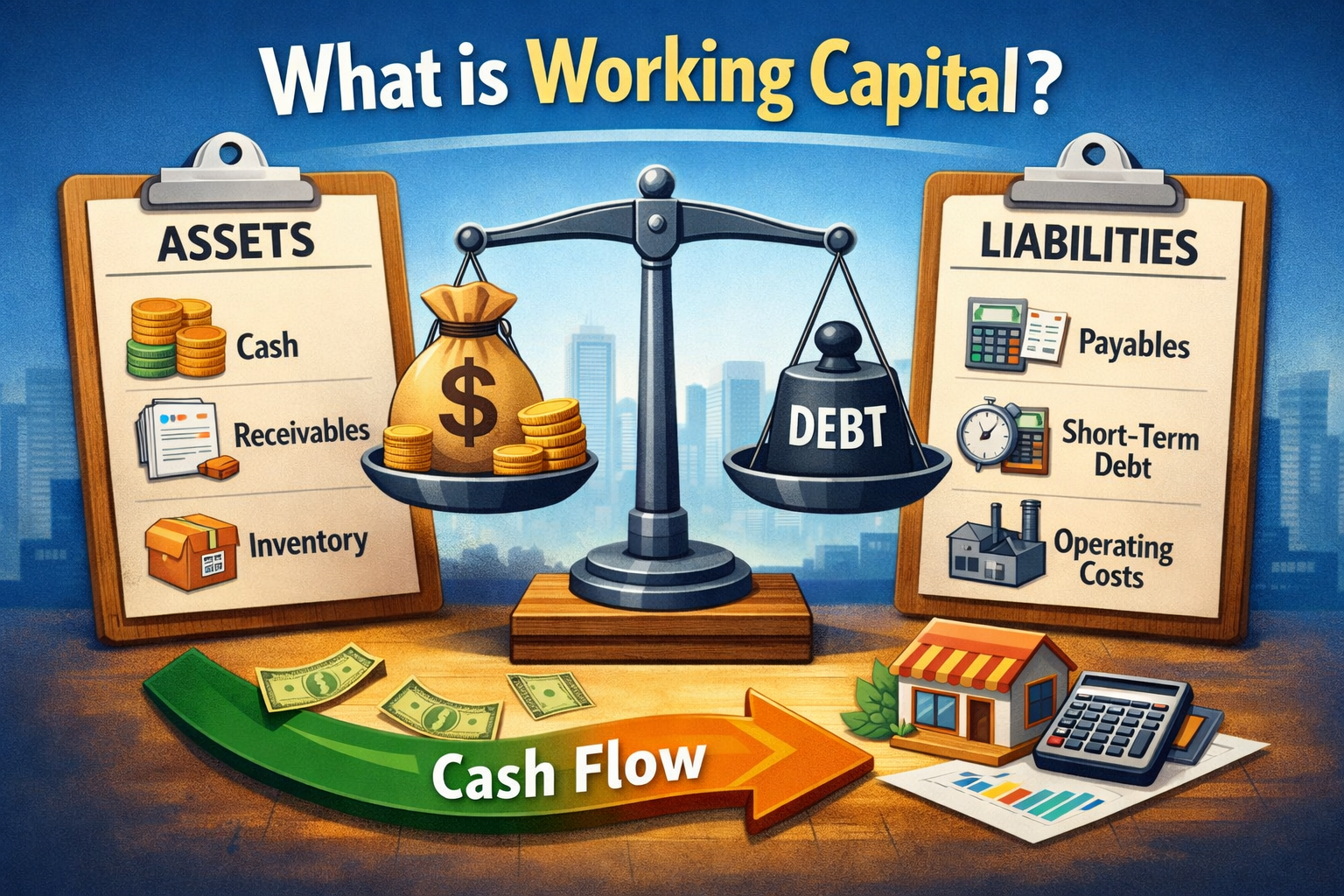
Working capital represents the resources a company needs to operate day to day. In practical terms, it is tied to three elements:
- inventory
- accounts receivable
- accounts payable
When a company grows, two of these tend to increase automatically.
To sustain higher sales, the business often needs more inventory. At the same time, it usually ends up with larger accounts receivable, because customers are buying more and paying later.
If suppliers do not provide enough financing through longer payment terms, the company must cover the gap itself.
That gap is funded with cash.
The Cash Conversion Cycle
This dynamic becomes clearer when we look at the cash conversion cycle, which measures how long it takes for a company to turn its investments in inventory and receivables back into cash.
In simple terms, the cycle looks like this:
Inventory days
- Accounts receivable days
? Accounts payable days
When a business grows quickly, two things often happen:
- inventory days increase to avoid stock shortages
- receivable days increase because sales are extended on credit
If supplier terms remain the same, the cycle becomes longer.
And a longer cycle means the company must finance its operations for a longer period before cash comes back.
Growth, in this sense, becomes a consumer of liquidity.
The Hidden Cost of Selling More
Beyond working capital, growth can also introduce other pressures on cash flow.
Companies frequently offer more generous payment terms to win clients.
They increase safety stock to avoid losing sales opportunities.
They incur higher logistics or production costs ahead of revenue collection.
Each decision may make perfect commercial sense. Yet financially, it pushes the company further into a position where cash leaves the business long before it returns.
If margins are thin, the situation becomes even more delicate. A company can double its sales and still find itself more dependent on bank financing than before.
The Moment Many Entrepreneurs Misinterpret
One of the most common misunderstandings I have seen in business is the assumption that higher sales automatically lead to more liquidity.
Entrepreneurs often expect that once the business grows, financial pressure will disappear.
In reality, growth frequently intensifies that pressure.
More sales require more capital.
More capital requires more financing.
And unless the company carefully manages its working capital and payment cycles, expansion can create a fragile financial structure.
The business looks stronger, but the foundation underneath may be weakening.
When Growth Becomes Sustainable
None of this means that growth is undesirable. On the contrary, expansion is essential for most businesses.
The challenge lies in understanding the financial mechanics behind growth.
Companies that grow sustainably usually pay close attention to:
- inventory rotation
- customer payment terms
- supplier financing
- working capital requirements
They recognize that sales growth must be accompanied by a financial structure capable of supporting it.
Without that structure, growth becomes less of an opportunity and more of a strain.
A Simple Question Worth Asking
For entrepreneurs, a useful question to ask is this:
How much additional cash does my business need to support each dollar of new sales?
The answer often surprises people.
Because sometimes the real constraint to growth is not demand, not marketing, and not competition.
It is liquidity.
Final Reflection
In business, growth is usually celebrated as a clear sign of progress.
But growth alone does not guarantee financial health.
I have seen companies expand rapidly while becoming increasingly dependent on external financing. And I have seen others grow more cautiously, yet maintain strong liquidity and financial stability.
The difference rarely lies in the ambition of the entrepreneurs.
It lies in their understanding of how growth affects cash.
Because in the end, a business does not struggle when sales increase.
It struggles when the cash required to support those sales exceeds the cash the business can generate.
Deja una respuesta