
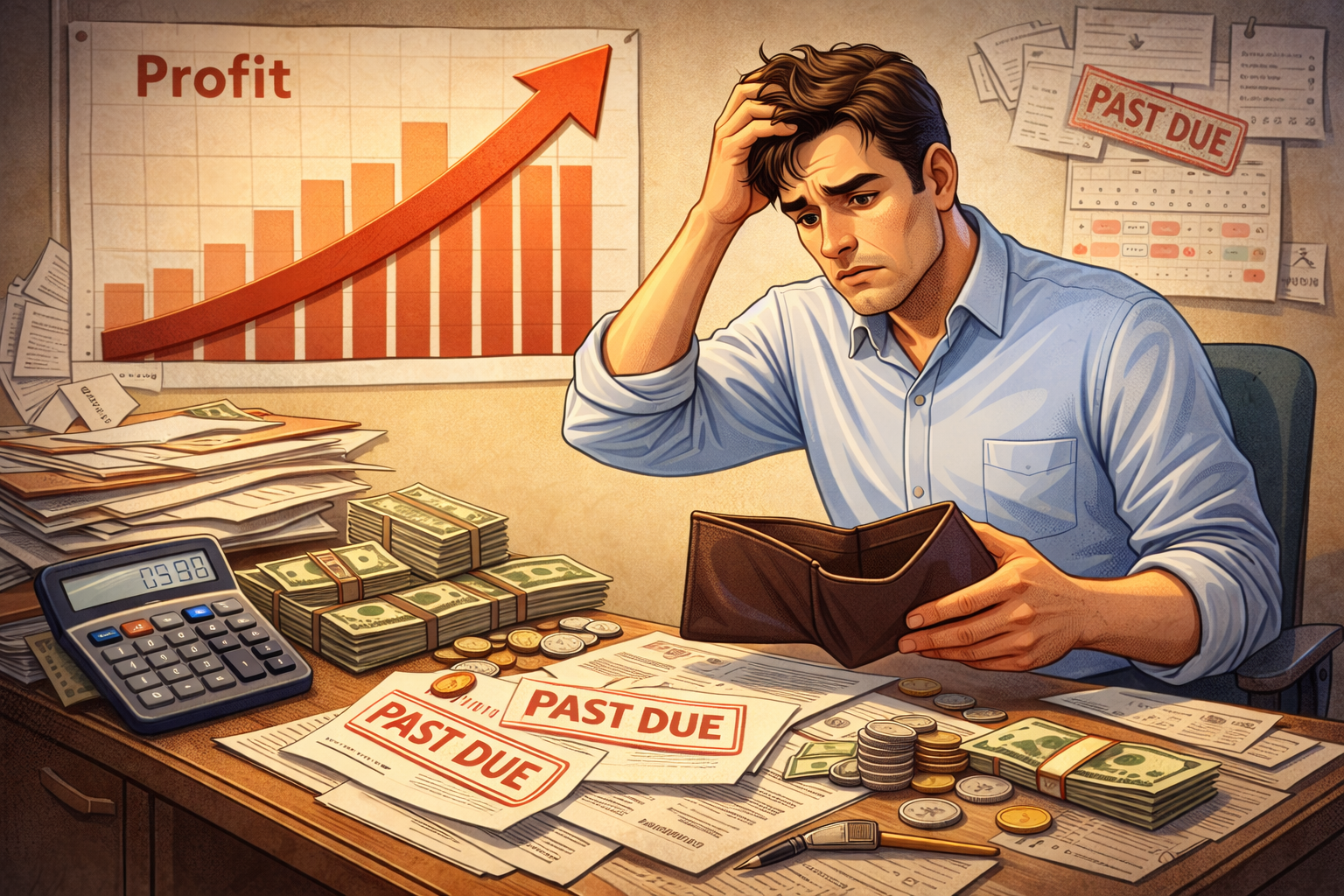
For many entrepreneurs, one question is difficult to understand: why do profitable businesses run out of cash even when their financial statements show positive results?
On paper, everything seems to be working.
Sales are growing.
The income statement shows profits.
Customers are buying.
Yet month after month, the business struggles to pay suppliers, salaries, or loans.
I have seen this situation more times than many entrepreneurs would expect. Companies that look financially healthy in their reports suddenly face severe liquidity pressure.
The problem is rarely profitability.
More often, the real issue is cash.
Why Profitable Businesses Run Out of Cash
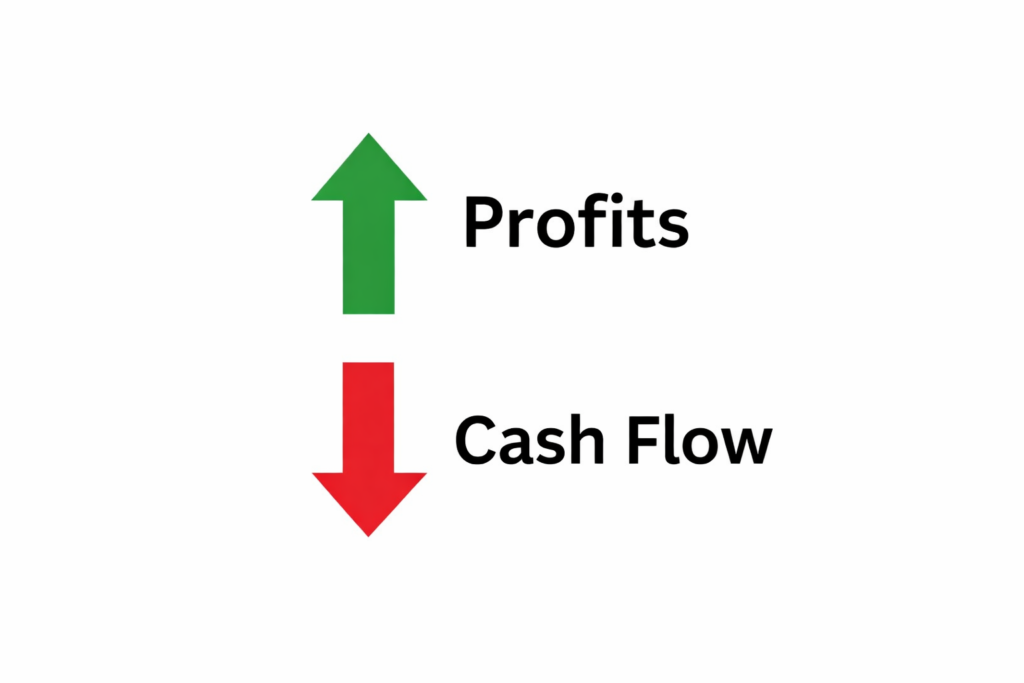
Profitability is typically measured through the income statement. It shows revenue, costs, operating expenses, and ultimately the profit generated by the business.
When that profit is positive, the conclusion seems obvious: the business is doing well.
But the income statement tells only part of the financial story.
A company can record sales today and recognize profits even if the money from those sales has not yet been collected.
In other words, a company may appear profitable long before it actually receives the cash.
This is where many entrepreneurs begin to discover the critical difference between profitability and liquidity.
(Aquí puedes enlazar a tu artículo anterior sobre rentabilidad vs liquidez)
The Money That Has Not Arrived Yet
In many industries, especially those that sell on credit, cash takes time to arrive.
Sales may be recorded today, but the payment may only be received in 30, 60, or even 90 days.
Meanwhile, the company must continue operating.
Suppliers must be paid.
Employees must be paid.
Operating expenses continue every day.
The business may look profitable in accounting terms, but the cash from those sales is still missing.
This delay between selling and collecting is one of the most common reasons profitable businesses run out of cash.
Capital Trapped in the Operation
Another factor that contributes to this problem is the amount of capital tied up inside the business operation itself.
As companies grow, they usually require:
- more inventory
- more accounts receivable
- more operational resources
Each of these elements absorbs cash.
The money has not disappeared, but it is no longer available. It is trapped in products waiting to be sold or invoices waiting to be paid.
From an accounting perspective, the business may continue to show profits.
From a financial perspective, however, liquidity becomes increasingly tight.
When Profit Does Not Pay the Bills
One of the most uncomfortable moments for a business owner happens when the company appears successful but still struggles financially.
Sales are increasing.
The income statement shows profits.
The business seems to be growing.
Yet every month the same question appears:
Is there enough cash in the bank to pay everything?
At that moment, many entrepreneurs discover something that is rarely emphasized in traditional business education.
Profit does not pay the bills.
Cash does.
The Mistake of Confusing Success With Liquidity
Many businesses do not fail because their business model is bad.
They fail because their financial structure cannot support their operations.
Growth requires capital.
Selling on credit requires financing.
Inventory requires investment.
If the business does not manage these elements carefully, it may find itself under financial pressure even while remaining profitable.
The issue is not making money.
The issue is when the money actually arrives.
A Question Few Entrepreneurs Ask
There is one simple question that reveals a lot about the true financial health of a business:
How much real cash does my business generate after operating?
Not accounting profit.
Not total sales.
But how much cash remains available after paying suppliers, employees, taxes, and operating costs.
Many companies discover that the answer is much smaller than they expected.
Final Reflection
Profitability is often celebrated as the ultimate indicator of business success.
But financial reality is more nuanced.
A company can be profitable and still face serious financial stress.
Because in the end, businesses rarely stop operating when they become unprofitable.
They stop when they run out of cash to keep going.

Deja una respuesta