

For many entrepreneurs, financial concepts often seem abstract until they become necessary.
A business may be growing, generating sales, and even reporting profits, yet the company still feels constant pressure on its cash position.
At that moment, many business owners begin to ask a very practical question:
How can I calculate my company’s working capital?
Understanding how to calculate working capital is one of the simplest ways to evaluate the short-term financial health of a business. It helps explain why some companies grow smoothly while others experience financial tension despite having strong sales.
The Working Capital Formula
The formula used to calculate working capital is very simple.
Working Capital = Current Assets – Current Liabilities
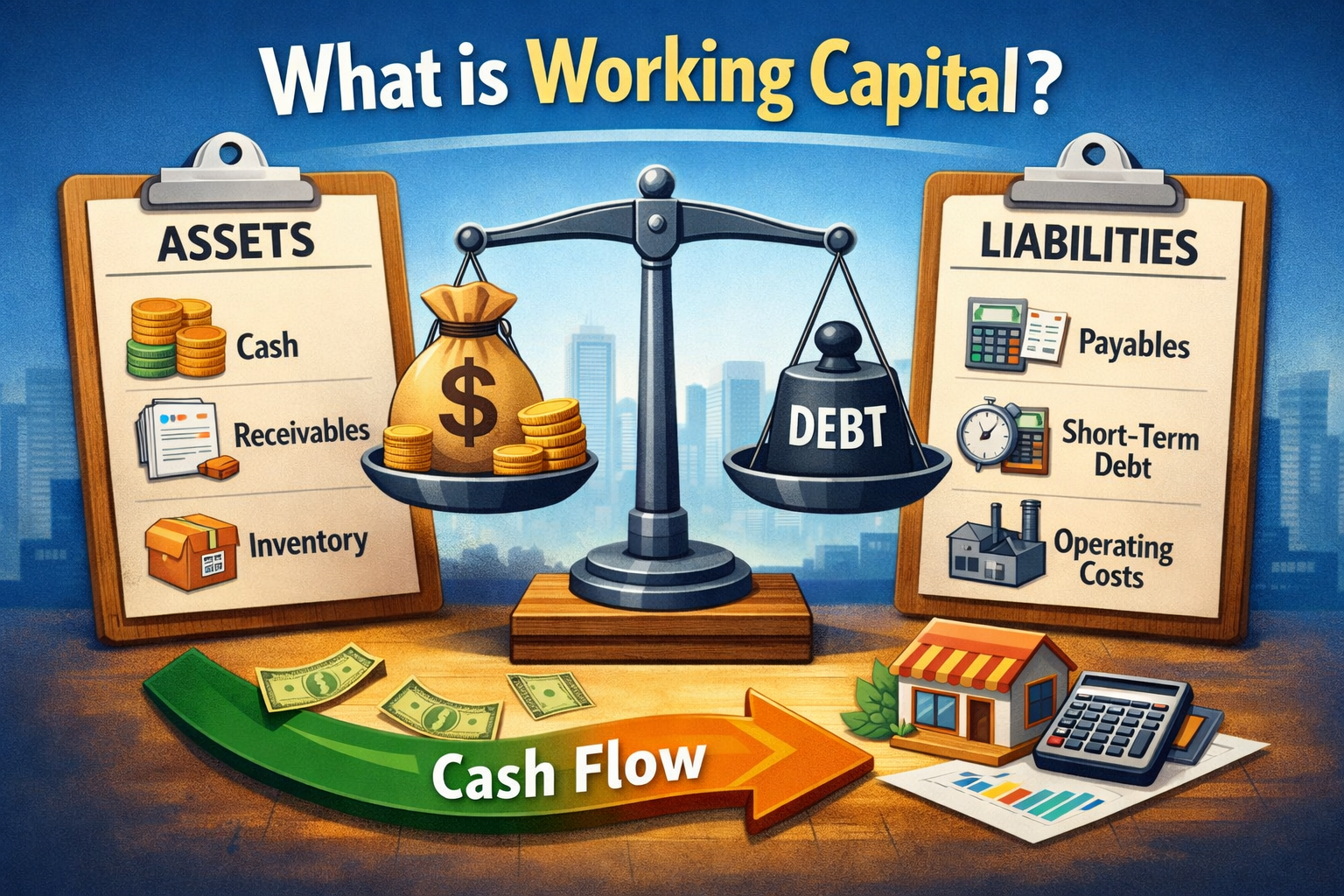
Current assets typically include:
- Cash
- Accounts receivable
- Inventory
Current liabilities usually include:
- Accounts payable
- Short-term debt
- Operating obligations
This calculation provides a quick snapshot of whether a company has enough short-term resources to cover its short-term obligations.
If current assets exceed current liabilities, the business has positive working capital.
If current liabilities exceed current assets, the business may face liquidity pressure.
A Simple Example of Working Capital
Consider the following simplified example.
A company reports the following values in its balance sheet:
Current Assets
Cash: $50,000
Accounts Receivable: $80,000
Inventory: $70,000
Total Current Assets = $200,000
Current Liabilities
Accounts Payable: $90,000
Short-Term Debt: $30,000
Total Current Liabilities = $120,000
Working Capital is therefore:
$200,000 – $120,000 = $80,000
In this case, the company has positive working capital, meaning it has enough short-term resources to meet its short-term obligations.
What Positive Working Capital Means
Positive working capital generally indicates that a business has enough liquidity to operate without immediate financial stress.
This gives the company flexibility to:
- purchase inventory
- pay suppliers
- manage operating expenses
- absorb temporary financial shocks
However, positive working capital does not automatically guarantee strong cash flow.
Poor management of receivables, inventory, or supplier payments can still create financial pressure.
What Negative Working Capital Means
Negative working capital occurs when a company’s current liabilities exceed its current assets.
In this situation, the company may struggle to cover short-term obligations.
Some industries intentionally operate with negative working capital, particularly businesses that receive payment from customers before paying suppliers.
However, for many companies, negative working capital can signal potential liquidity risk.
This is one of the reasons why businesses sometimes run out of cash even when they appear profitable.
(Aquí enlazas al artículo: Why Profitable Businesses Run Out of Cash)
Why Entrepreneurs Should Track Working Capital
Working capital is one of the most useful indicators of a company’s operational health.
Monitoring working capital regularly helps business owners:
- anticipate liquidity problems
- manage growth more safely
- understand the relationship between sales and cash flow
Many companies discover that rapid sales growth increases the need for working capital. As sales increase, businesses often need to finance larger inventories and higher levels of accounts receivable.
This explains why growing sales can destroy your cash flow if the business expands too quickly without adequate financial planning.
Final Reflection
Calculating working capital is simple, but understanding its implications can significantly improve financial decision-making.
Many companies experience financial stress not because they are unprofitable, but because they underestimate the importance of managing their short-term resources.
For many businesses, the difference between sustainable growth and financial pressure lies in how effectively working capital is monitored and managed.

Deja una respuesta