For many business owners, growth often looks like the ultimate sign of success. Many entrepreneurs discover this problem when they begin to understand the difference between profitability and liquidity.
Sales increase.
Customers keep coming.
Revenue numbers move upward.
On the surface, everything seems to be working.
Yet many companies experience a strange financial tension precisely during periods of growth. Despite increasing sales and positive financial statements, the business constantly feels short of cash.
The explanation for this situation often lies in a concept that many entrepreneurs underestimate:
working capital.
Understanding what working capital is—and why it matters—can explain why some businesses grow smoothly while others struggle to sustain their operations.
What Is Working Capital
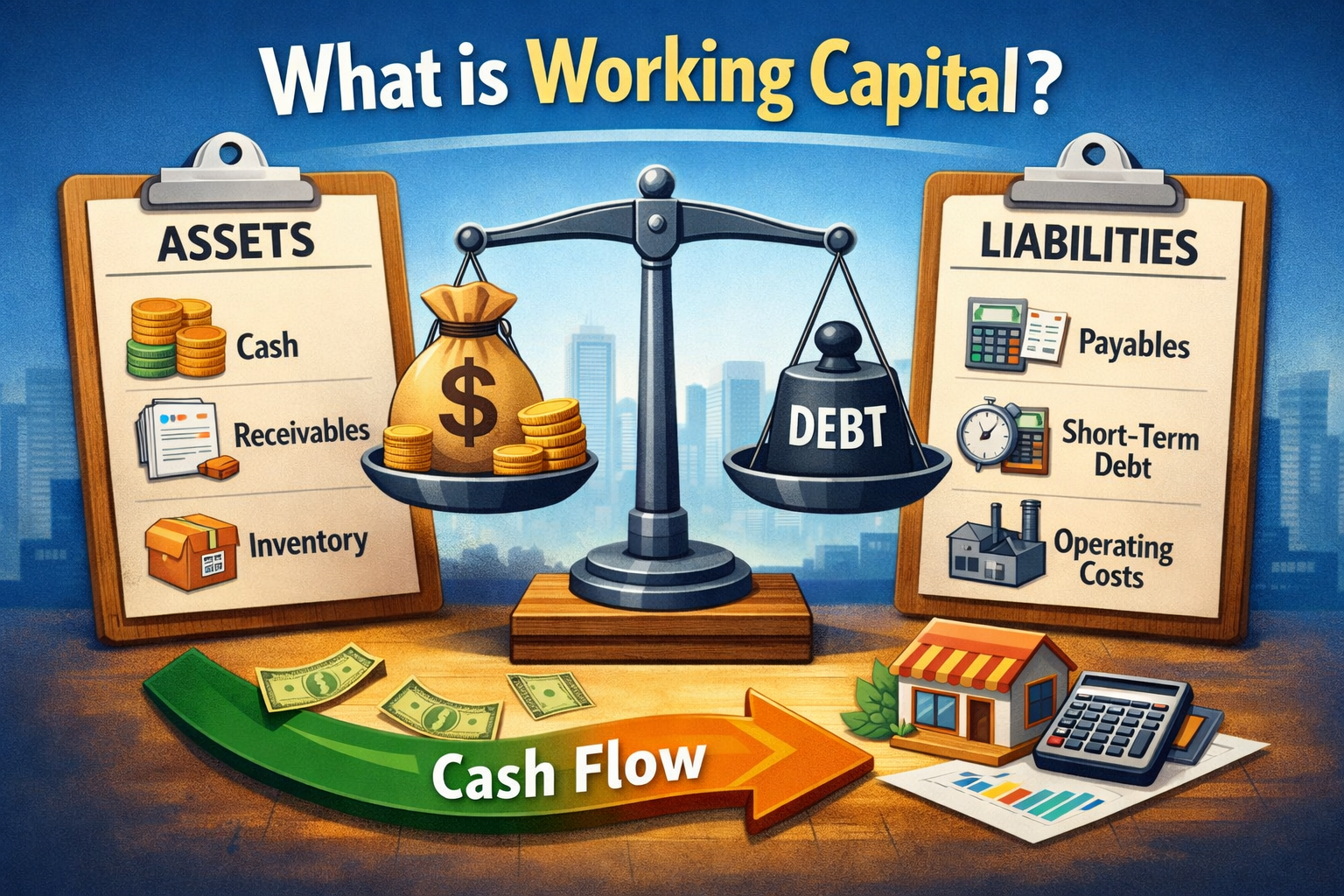
Working capital represents the financial resources a company needs to operate in the short term.
In simple terms, it measures the money available to run the daily operations of a business.
The formula is straightforward:
Working Capital = Current Assets – Current Liabilities
Current assets typically include:
- cash
- accounts receivable
- inventory
Current liabilities include:
- accounts payable
- short-term debt
- operational obligations
When a company has positive working capital, it generally means it has enough short-term resources to cover its short-term obligations.
When working capital becomes too tight, even profitable businesses can experience financial pressure.
Why Working Capital Matters
Working capital matters because it determines the operational flexibility of a business.
A company may appear profitable on paper while still struggling financially if its working capital is insufficient.
Every business requires continuous cash to:
- purchase inventory
- pay suppliers
- cover salaries
- maintain operations
If working capital is not properly managed, the company may find itself forced to rely on external financing simply to maintain normal operations.
In extreme situations, lack of working capital can cause businesses to run out of cash even when they appear profitable.
The Link Between Working Capital and Cash Flow
Working capital is closely connected to cash flow.
When a business grows, it usually requires:
- more inventory
- more credit extended to customers
- more operational resources
This is one of the reasons growing sales can destroy your cash flow if working capital is not properly managed.
Each of these elements absorbs cash.
As a result, growth often requires additional working capital.
This explains why some companies experience a paradox: sales increase, profits appear healthy, yet liquidity becomes increasingly tight.
A Common Mistake Entrepreneurs Make
One of the most common financial mistakes entrepreneurs make is assuming that higher sales automatically improve the financial health of the business.
In reality, growth can increase pressure on working capital.
If sales grow but:
- customers pay more slowly
- inventory levels increase
- suppliers require faster payment
the business may need significantly more cash to sustain its operations.
Without careful management, growth itself can become a source of financial stress.
Final Reflection
Working capital is one of the simplest financial indicators, yet it is often overlooked by many business owners.
Understanding how working capital works can clarify many situations that initially appear contradictory:
companies with growing sales, positive profits, and yet persistent liquidity pressure.
In many cases, the difference between sustainable growth and financial stress lies in how effectively a business manages its working capital.


Deja una respuesta