
For many entrepreneurs, financial stress does not come from a lack of sales.
In fact, many businesses experience the opposite problem: revenue grows, profits appear on financial statements, yet the company constantly struggles to maintain healthy cash flow.
Understanding the relationship between profitability, liquidity, and working capital is essential for any business owner who wants to grow sustainably.
This guide explores the key financial concepts that explain why some companies expand successfully while others face financial pressure despite strong sales.
Profitability vs Liquidity
Many entrepreneurs assume that if their company is profitable, everything is working correctly.
However, profitability and liquidity measure two very different aspects of financial health.
Profitability reflects whether a business generates earnings after covering its costs and expenses.
Liquidity, on the other hand, reflects the company’s ability to meet its short-term financial obligations.
A business may report profits while still experiencing cash shortages if the timing of incoming and outgoing payments is not properly managed.
To understand this concept in detail, read:
Profitability vs Liquidity: The Mistake Killing Many Small Businesses
Why Growing Sales Can Destroy Your Cash Flow
Sales growth is usually seen as a positive signal for any company.
However, growth can increase the demand for working capital.
As sales expand, businesses often need to finance:
- higher inventory levels
- larger accounts receivable
- increased operating expenses
If this expansion is not properly financed, the company may face severe cash pressure.
This is why it is possible for growing companies to experience liquidity problems.
You can explore this phenomenon in detail here:
Why Growing Sales Can Destroy Your Cash Flow
Why Profitable Businesses Run Out of Cash
One of the most confusing situations for many entrepreneurs is when a profitable business suddenly faces cash shortages.
This typically occurs because accounting profits do not always reflect real cash movements.
Factors such as delayed payments from customers, inventory accumulation, or short-term financial obligations can create a gap between reported profits and available cash.
This issue explains why many businesses that appear successful on paper may struggle financially in reality.
Learn more about this topic in:
Why Profitable Businesses Run Out of Cash
What Is Working Capital?
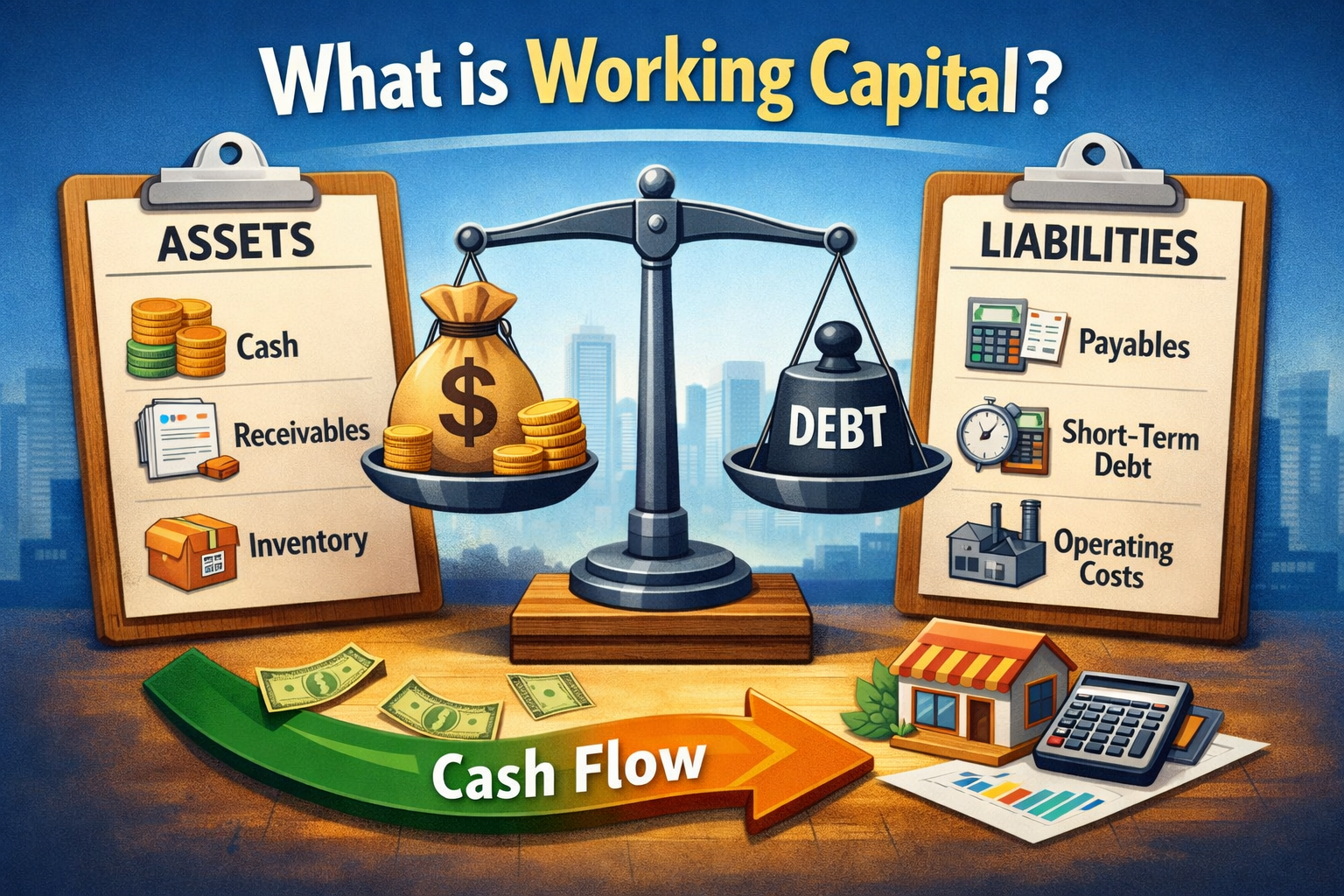
Working capital is one of the most important indicators of a company’s short-term financial health.
It represents the difference between a company’s current assets and its current liabilities.
In simple terms, working capital measures whether a business has enough resources to continue operating smoothly in the short term.
Understanding working capital helps entrepreneurs anticipate liquidity challenges before they become serious problems.
You can read a full explanation here:
What Is Working Capital and Why It Matters
How to Calculate Working Capital
Once the concept of working capital is clear, the next step is learning how to calculate it.
The formula itself is simple, but interpreting the result correctly can provide valuable insights into the financial structure of a business.
Calculating working capital helps entrepreneurs understand whether their operations are financially sustainable and whether growth may require additional financing.
You can learn the step-by-step calculation here:
How to Calculate Working Capital (With Simple Examples)
Final Thoughts
Financial problems rarely appear suddenly.
Most of the time they develop slowly as businesses grow without fully understanding the relationship between profits, liquidity, and working capital.
Entrepreneurs who understand these concepts early are better equipped to manage growth, avoid unnecessary financial stress, and build more resilient companies.


Deja una respuesta